
Chronology and Origins of Indo-European Civilizations
Volume 2 Images
Chapter 12
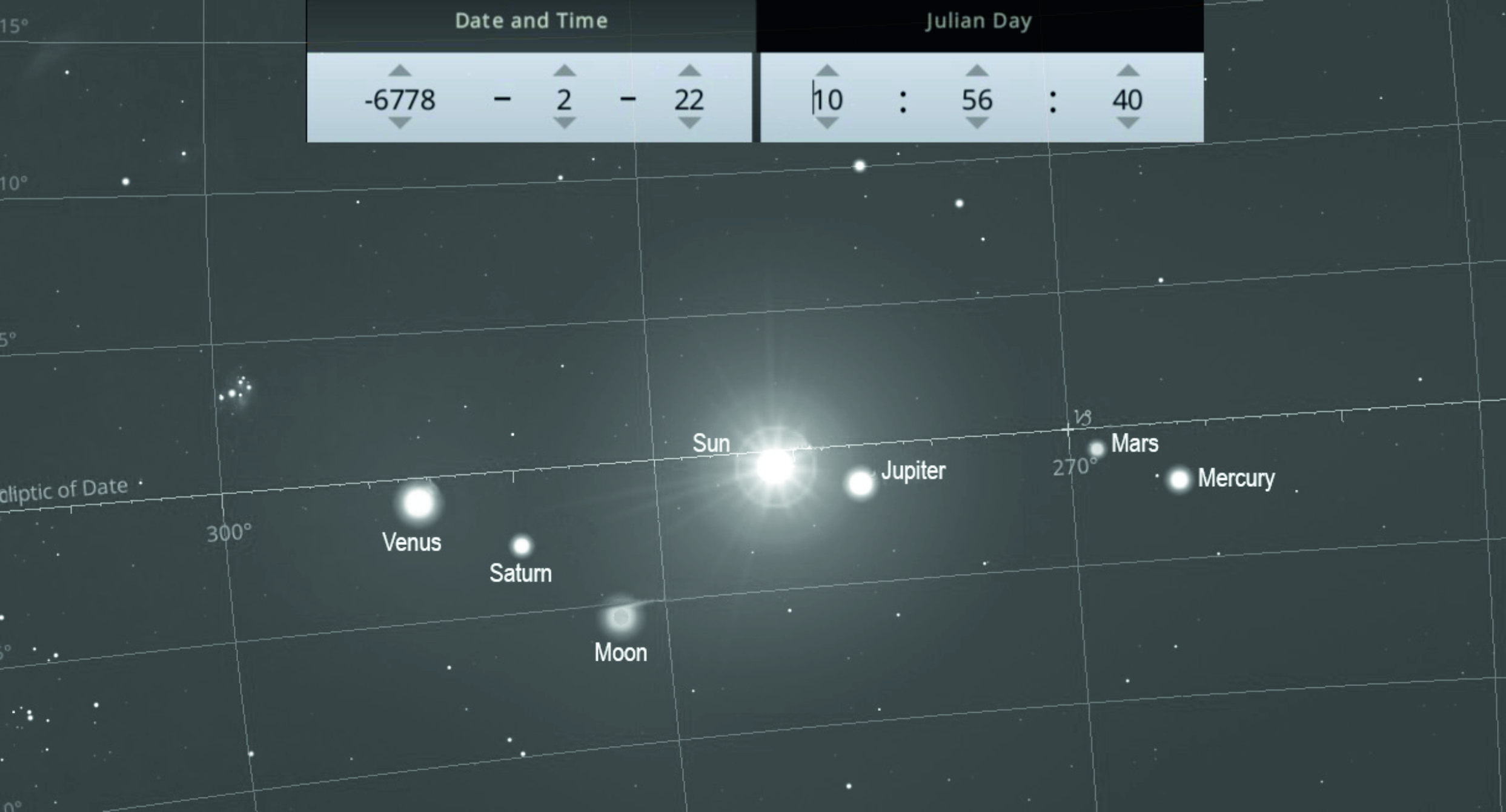
Figure 12.1
The conjunction of all planets in Aries on 22 February 6778 BCE.
(Source: Stellarium software stimulation.)
The conjunction of all planets in Aries on 22 February 6778 BCE.
(Source: Stellarium software stimulation.)
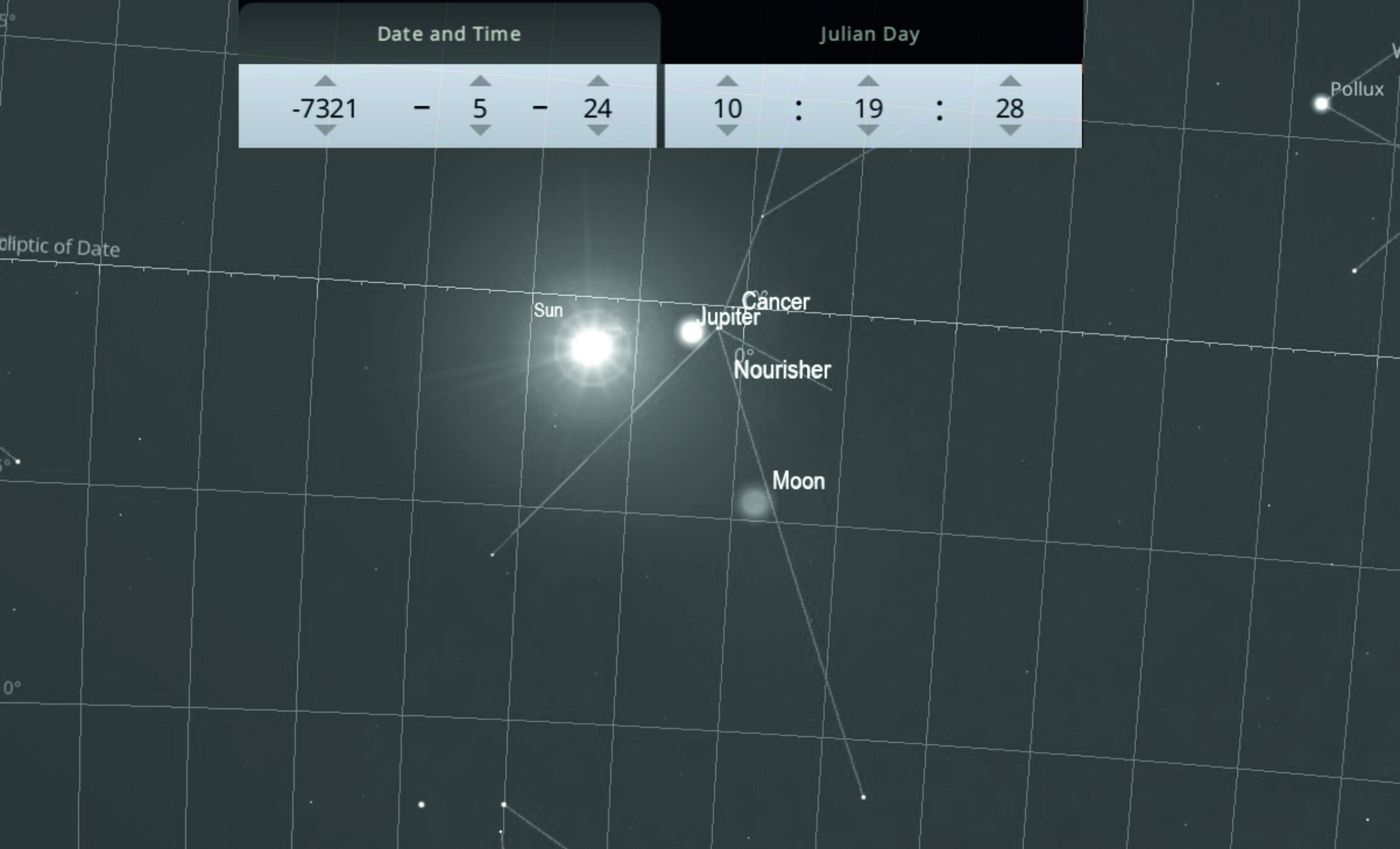
Figure 12.2
A conjunction of the sun, moon and Jupiter in Pushya nakshatra in 7322-7321 BCE.
(Source: Stellarium software simulation.)
A conjunction of the sun, moon and Jupiter in Pushya nakshatra in 7322-7321 BCE.
(Source: Stellarium software simulation.)
Chapter 17
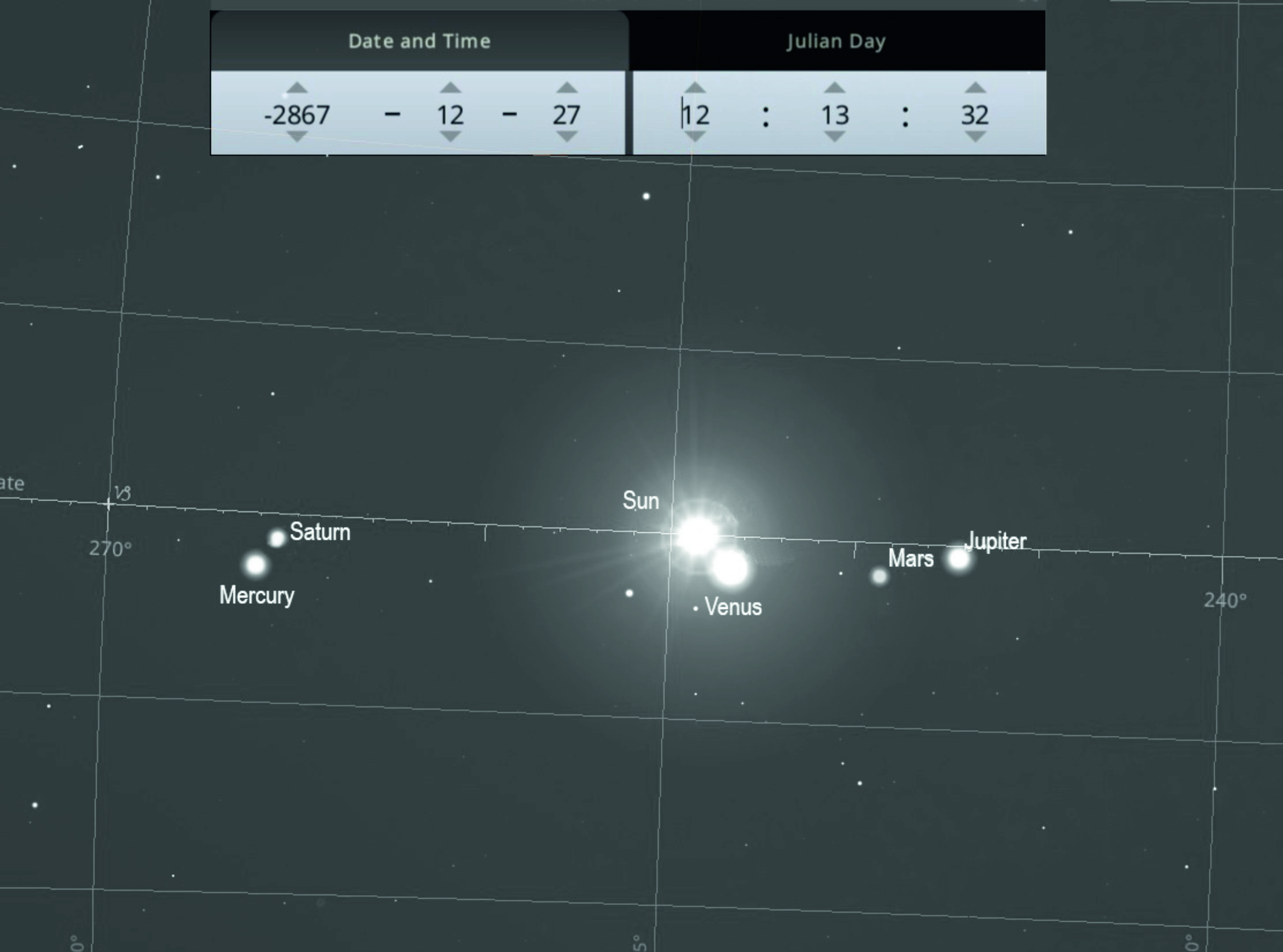
Figure 17.4
The conjunction of five planets during the reign of King Yu of the Xia dynasty.
(Source: Stellarium software simulation.)
The conjunction of five planets during the reign of King Yu of the Xia dynasty.
(Source: Stellarium software simulation.)
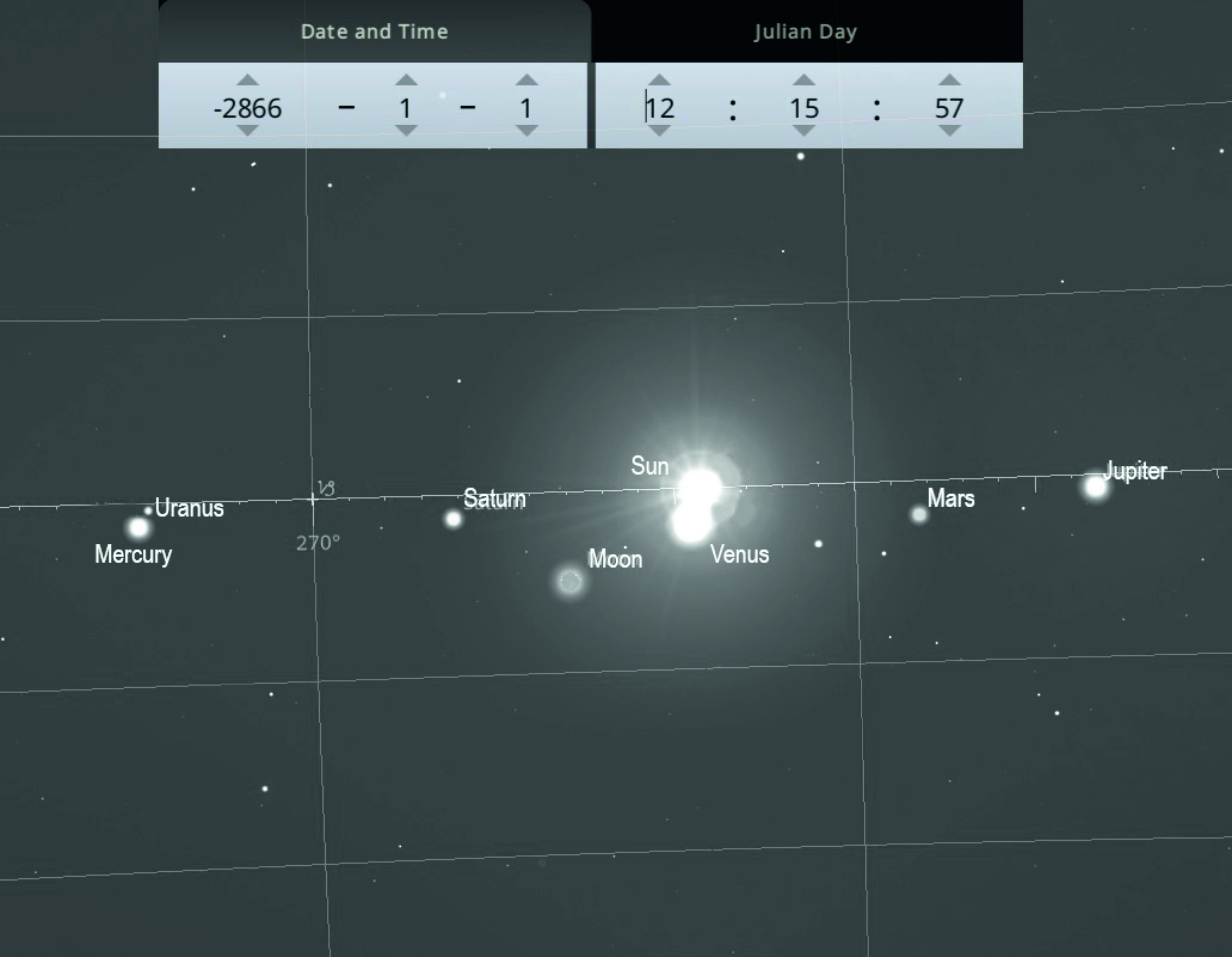
Figure 17.5
The conjunction of five planets during the reign of King Yu of the Xia dynasty.
(Source: Stellarium software simulation.)
The conjunction of five planets during the reign of King Yu of the Xia dynasty.
(Source: Stellarium software simulation.)
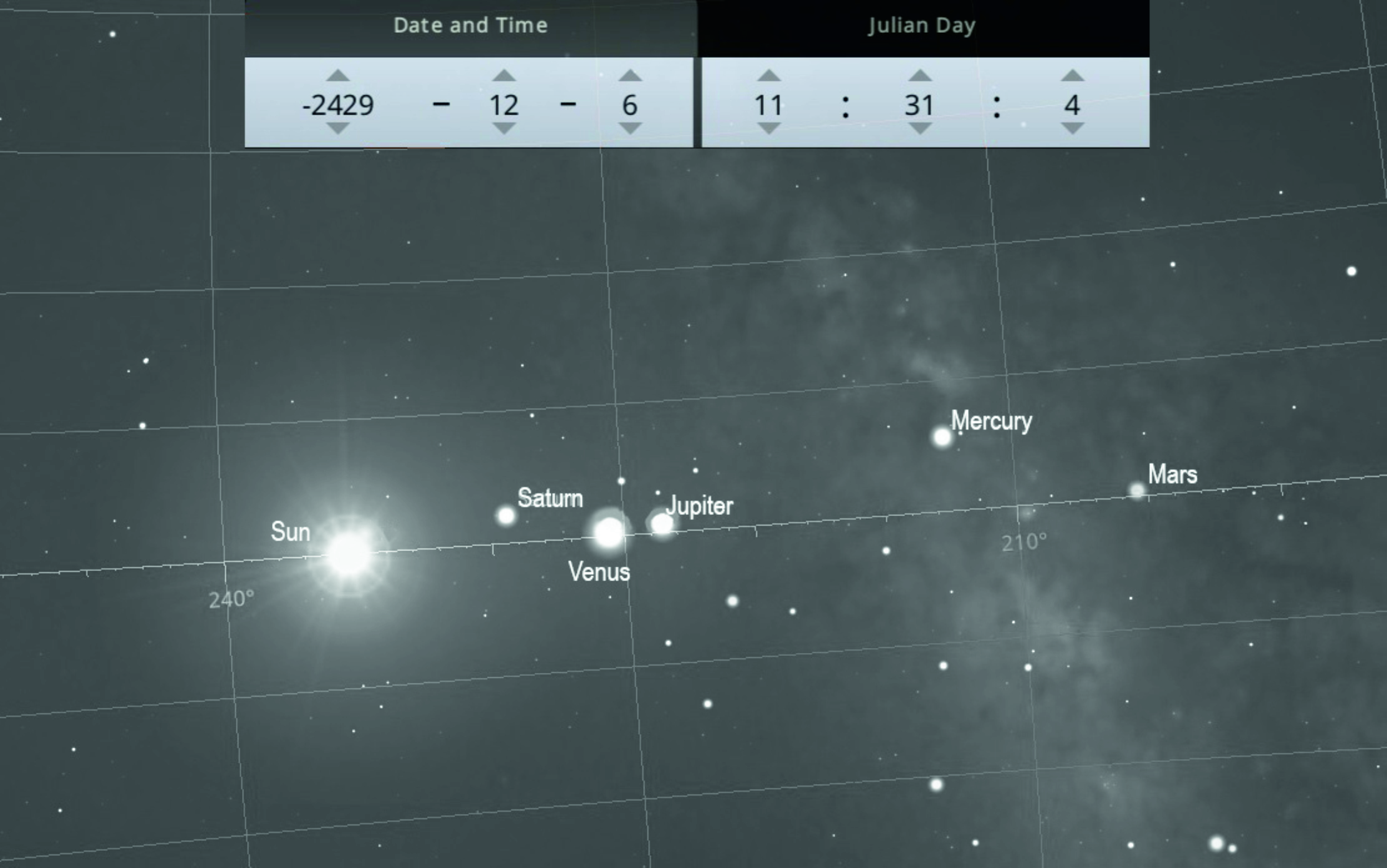
Figure 17.6
The conjunction of five planets in the 10th year of King Di Guy, the last King of the Xia dynasty.
(Source: Stellarium software simulation.)
The conjunction of five planets in the 10th year of King Di Guy, the last King of the Xia dynasty.
(Source: Stellarium software simulation.)
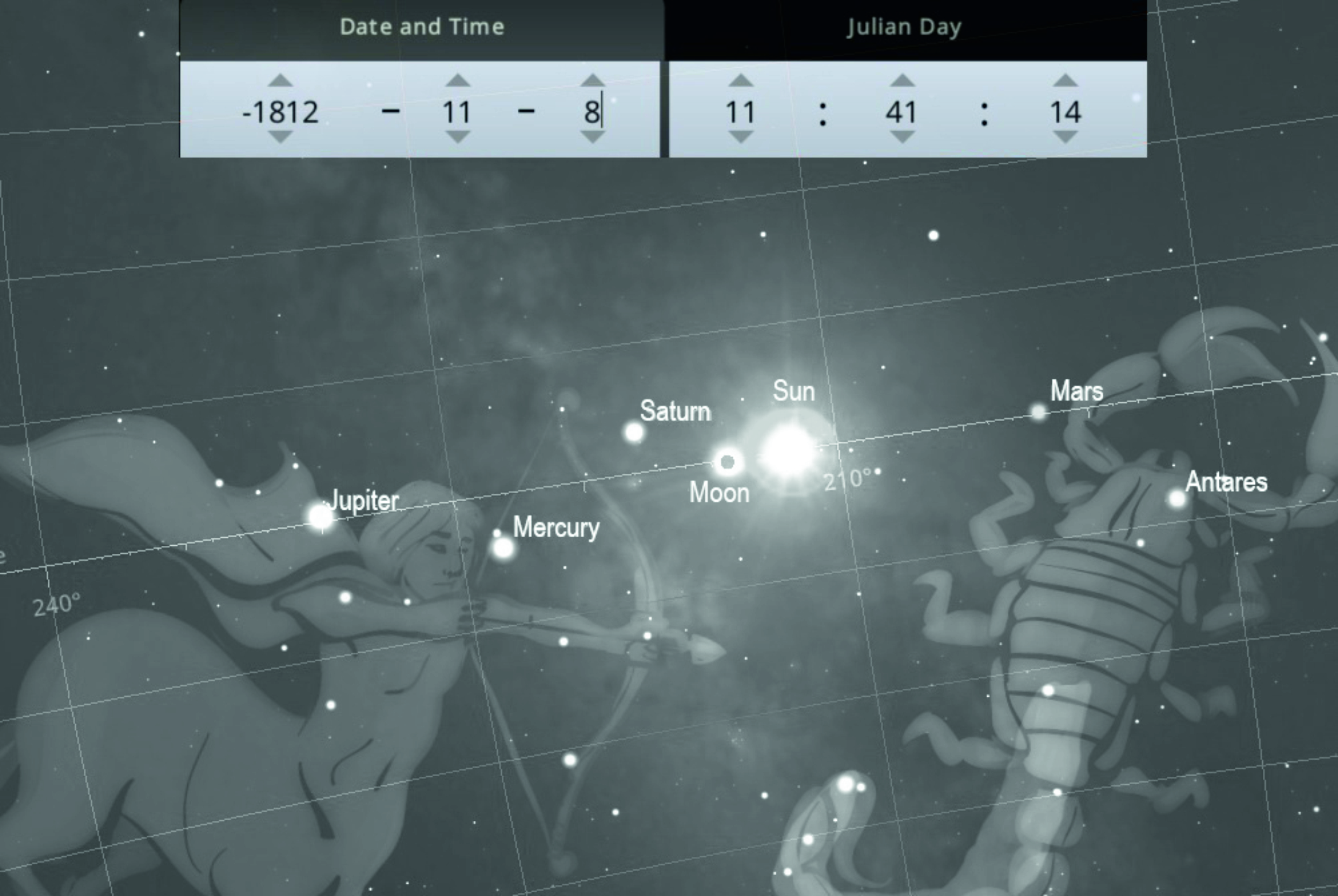
Figure 17.7
The conjunction of five planets in Scorpio and Sagittarius in the 2nd regnal year of King Dixin.
(Source: Stellarium software simulation.)
The conjunction of five planets in Scorpio and Sagittarius in the 2nd regnal year of King Dixin.
(Source: Stellarium software simulation.)
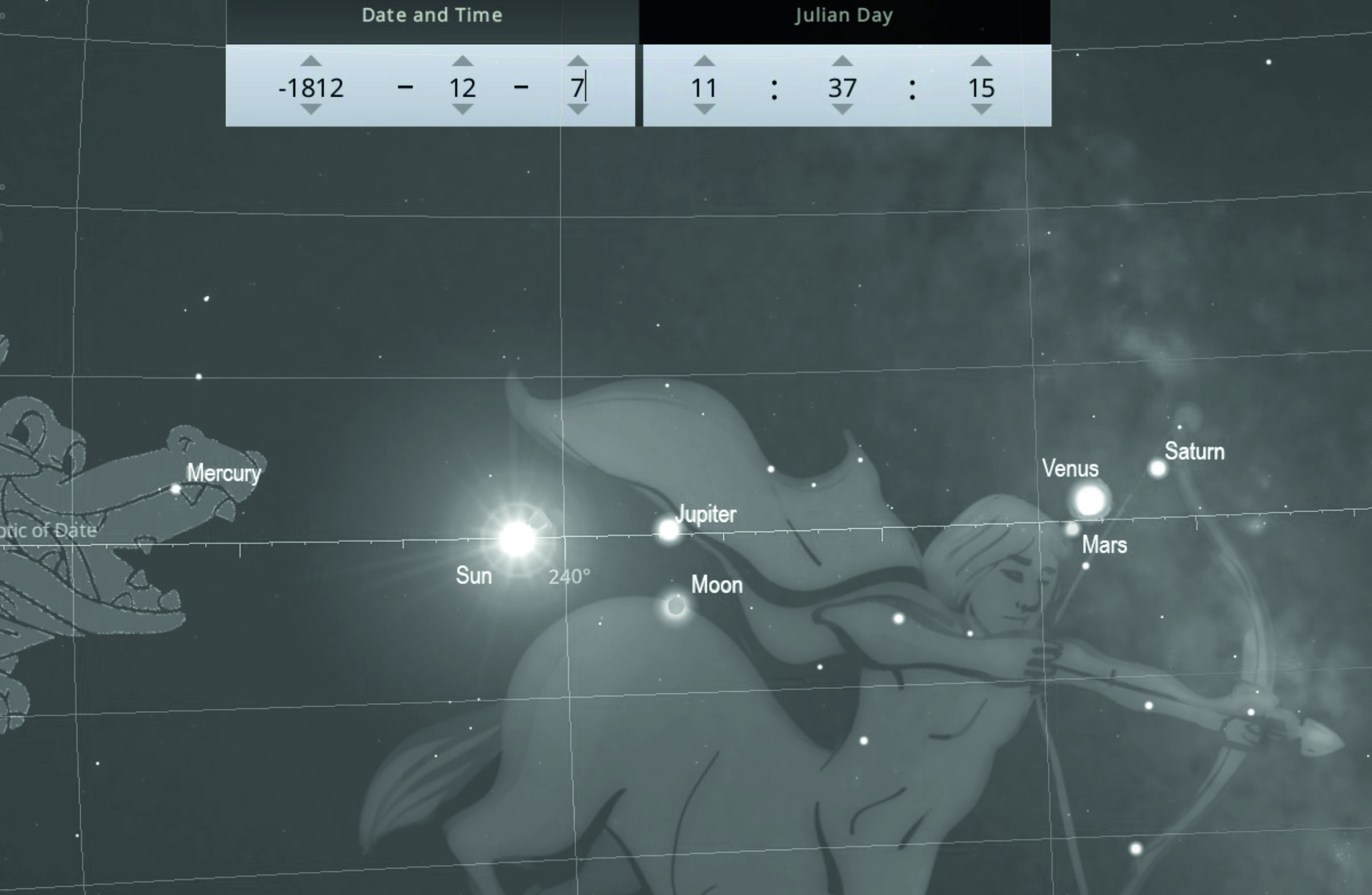
Figure 17.8
The conjunction of five planets in Scorpio and Sagittarius in the 2nd regnal year of King Dixin.
(Source: Stellarium software simulation.)
The conjunction of five planets in Scorpio and Sagittarius in the 2nd regnal year of King Dixin.
(Source: Stellarium software simulation.)
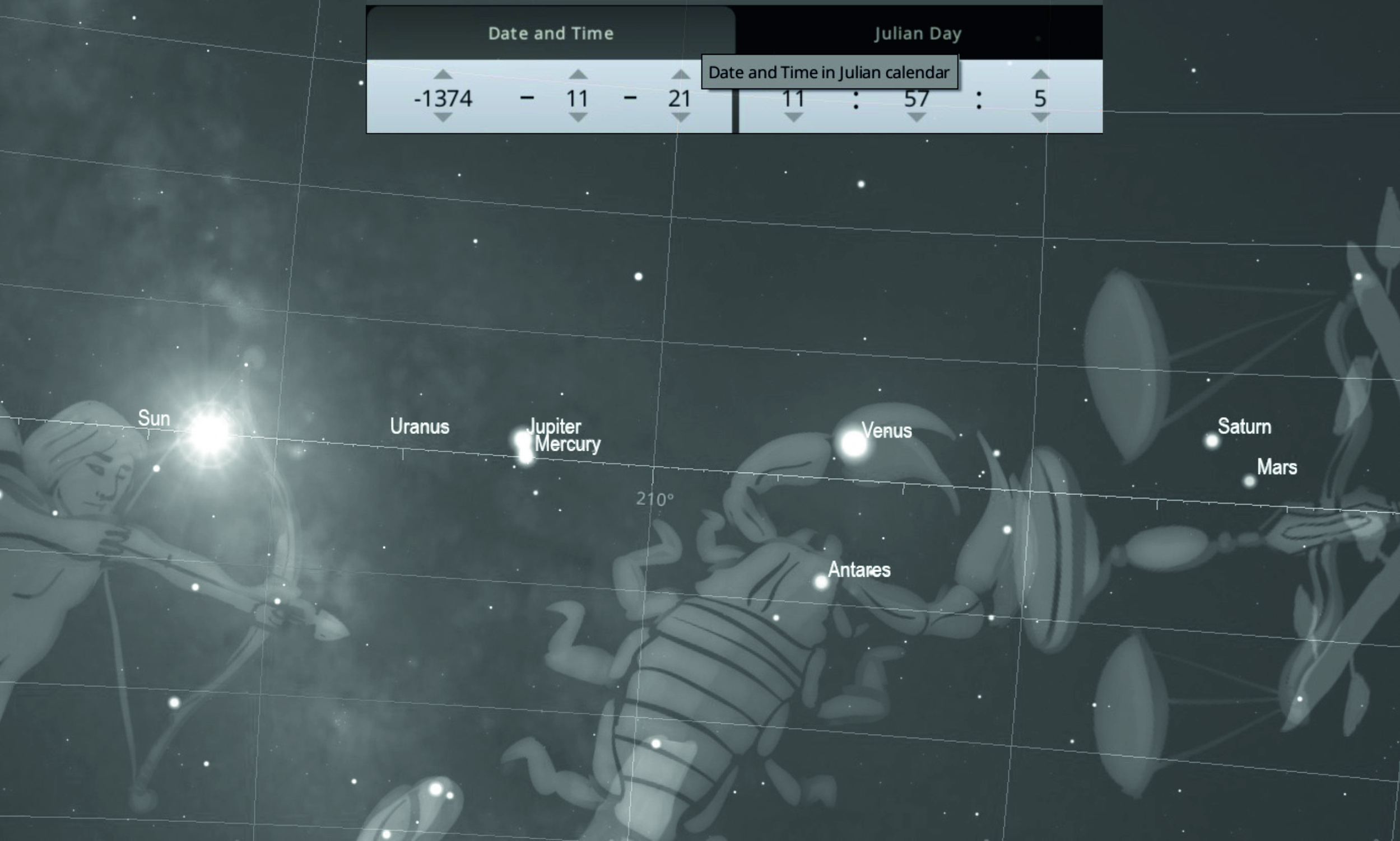
Figure 17.12
The conjunction of all planets on 21 November 1374 BCE before Huan became the lort of the Lu state.
(Source: Stellarium software simulation.)
The conjunction of all planets on 21 November 1374 BCE before Huan became the lort of the Lu state.
(Source: Stellarium software simulation.)
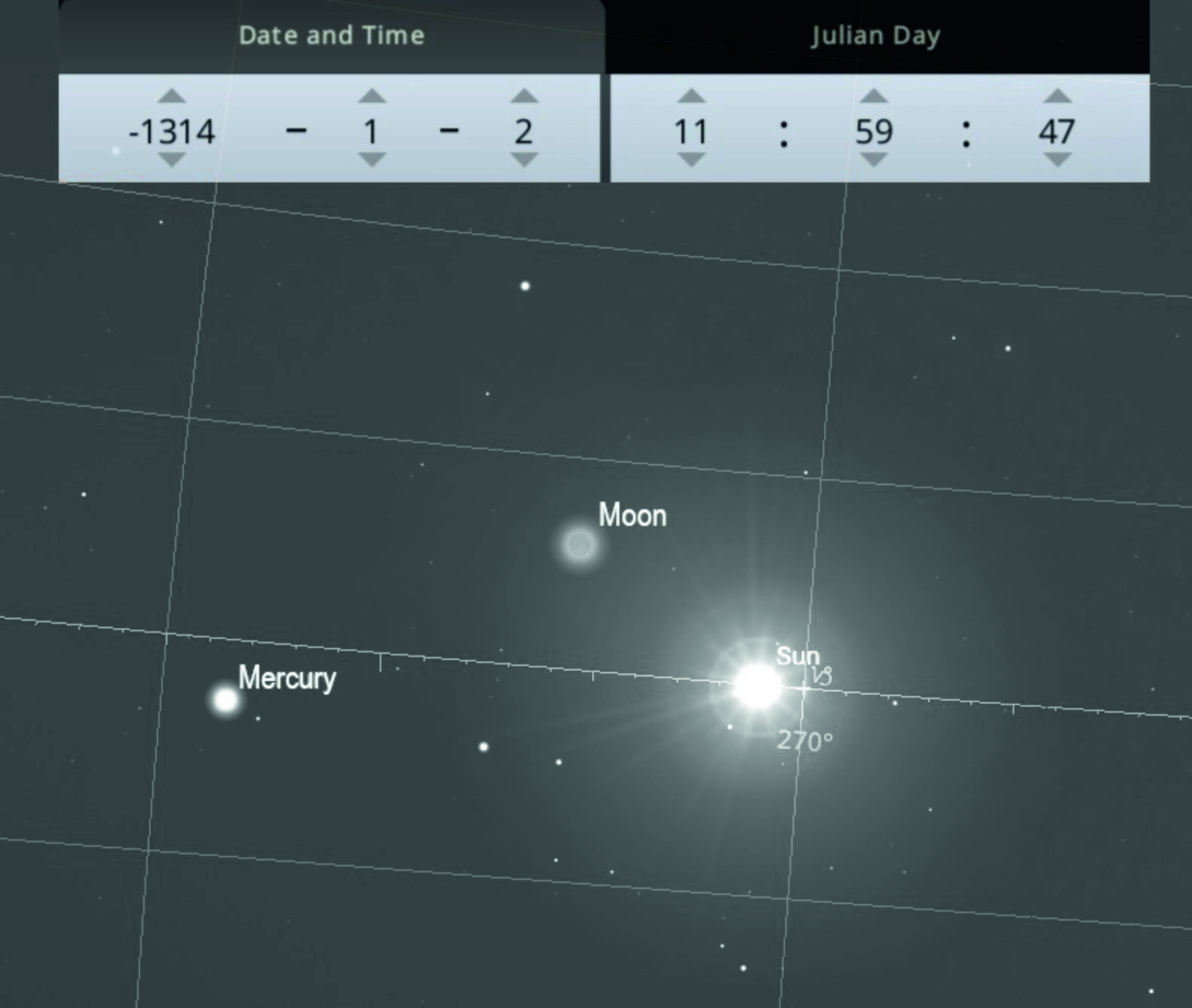
Figure 17.13
Winter solstice on the first day following the new moon(2 January 1314 BCE) in the 5th year of Duke Xi. the day was Xin-hai (48).
(Source: Stellarium software stimulation.)
Winter solstice on the first day following the new moon(2 January 1314 BCE) in the 5th year of Duke Xi. the day was Xin-hai (48).
(Source: Stellarium software stimulation.)
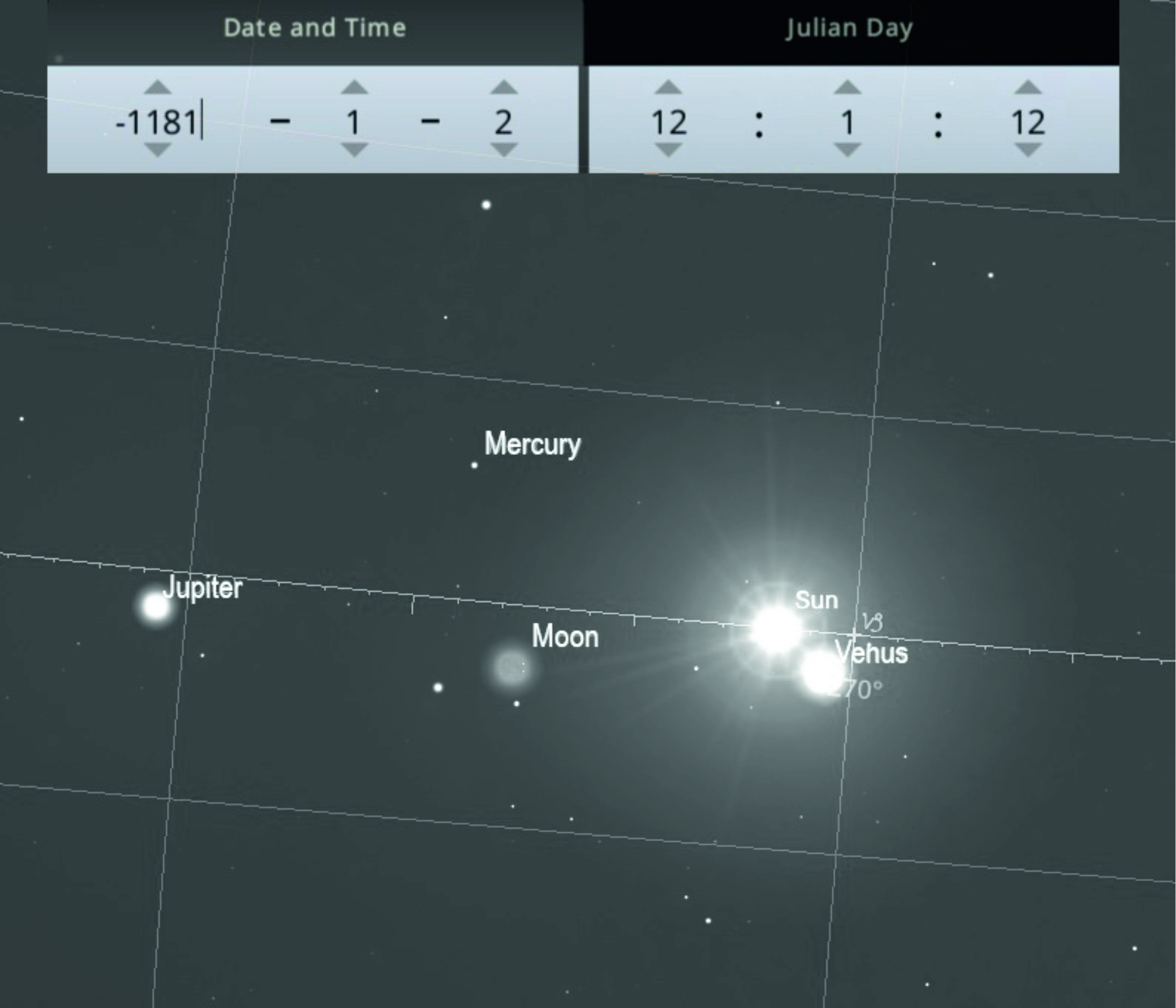
Figure 17.14
Winter solstice on the first day following the new moon(2 January 1181 BCE) in the 20th year of Duke Xi. the day was Ji-Chou (26).
(Source: Stellarium software stimulation.)
Winter solstice on the first day following the new moon(2 January 1181 BCE) in the 20th year of Duke Xi. the day was Ji-Chou (26).
(Source: Stellarium software stimulation.)
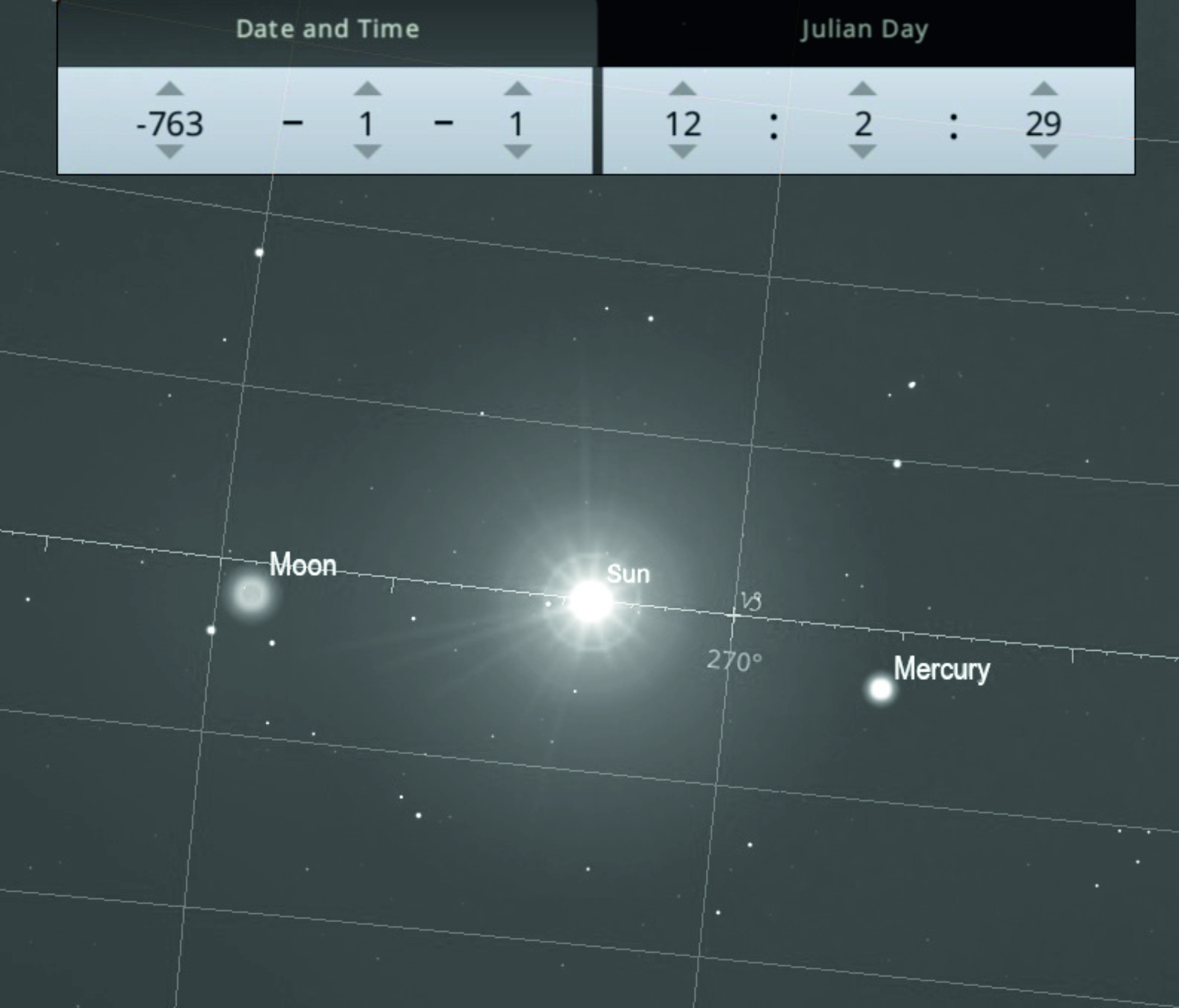
Figure 17.15
Winter solstice on the first day of the new moon (1 January 763 BCE) in the 38th year of Wu of Han.
(Source: Stellarium software stimulation.)
Winter solstice on the first day of the new moon (1 January 763 BCE) in the 38th year of Wu of Han.
(Source: Stellarium software stimulation.)
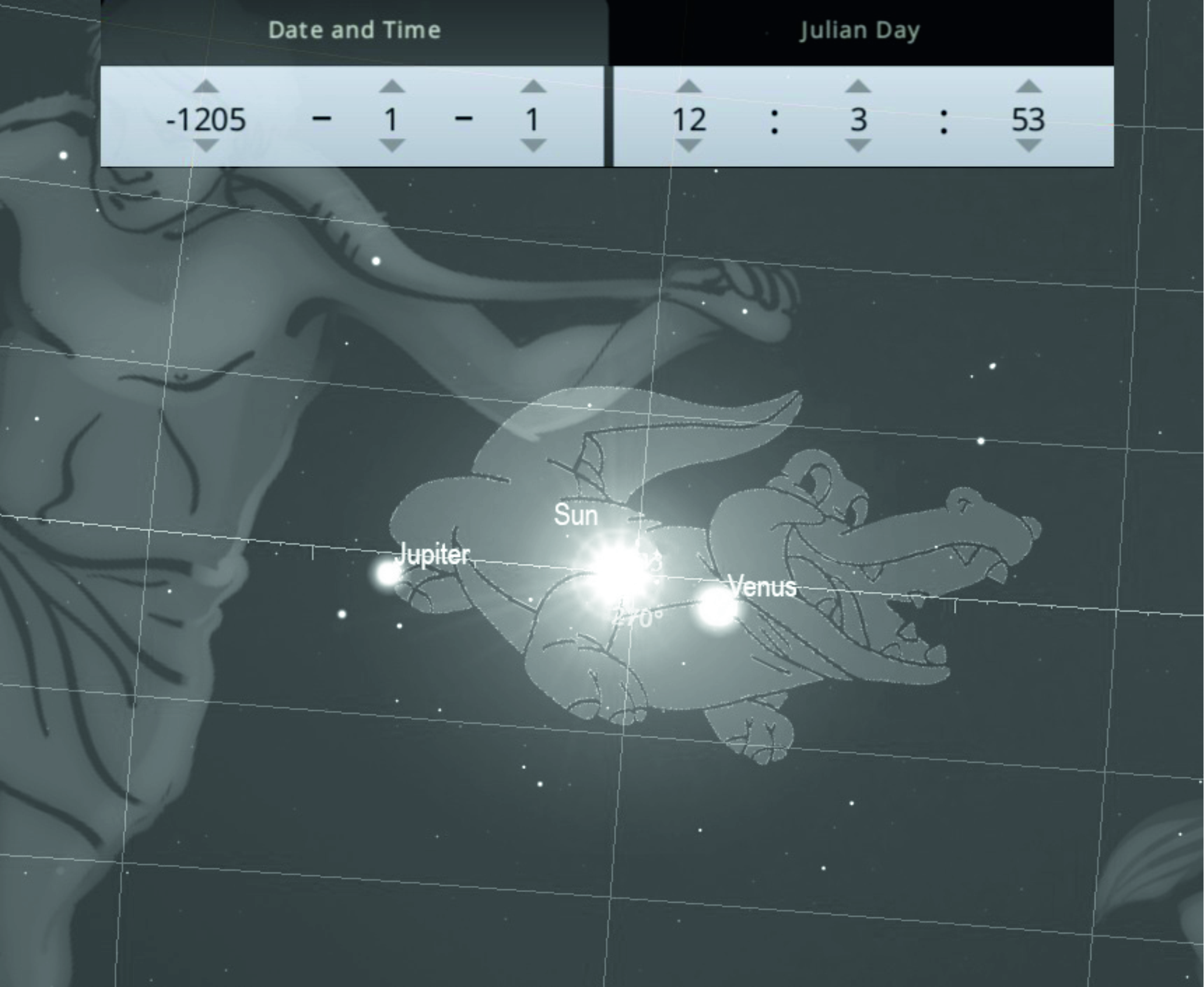
Figure 17.16
Winter solstice and Jupiter were in the Xingji constellation in the 28th year of Duke Zaho (1205 BCE).
(Source: Stellarium software stimulation)
Winter solstice and Jupiter were in the Xingji constellation in the 28th year of Duke Zaho (1205 BCE).
(Source: Stellarium software stimulation)
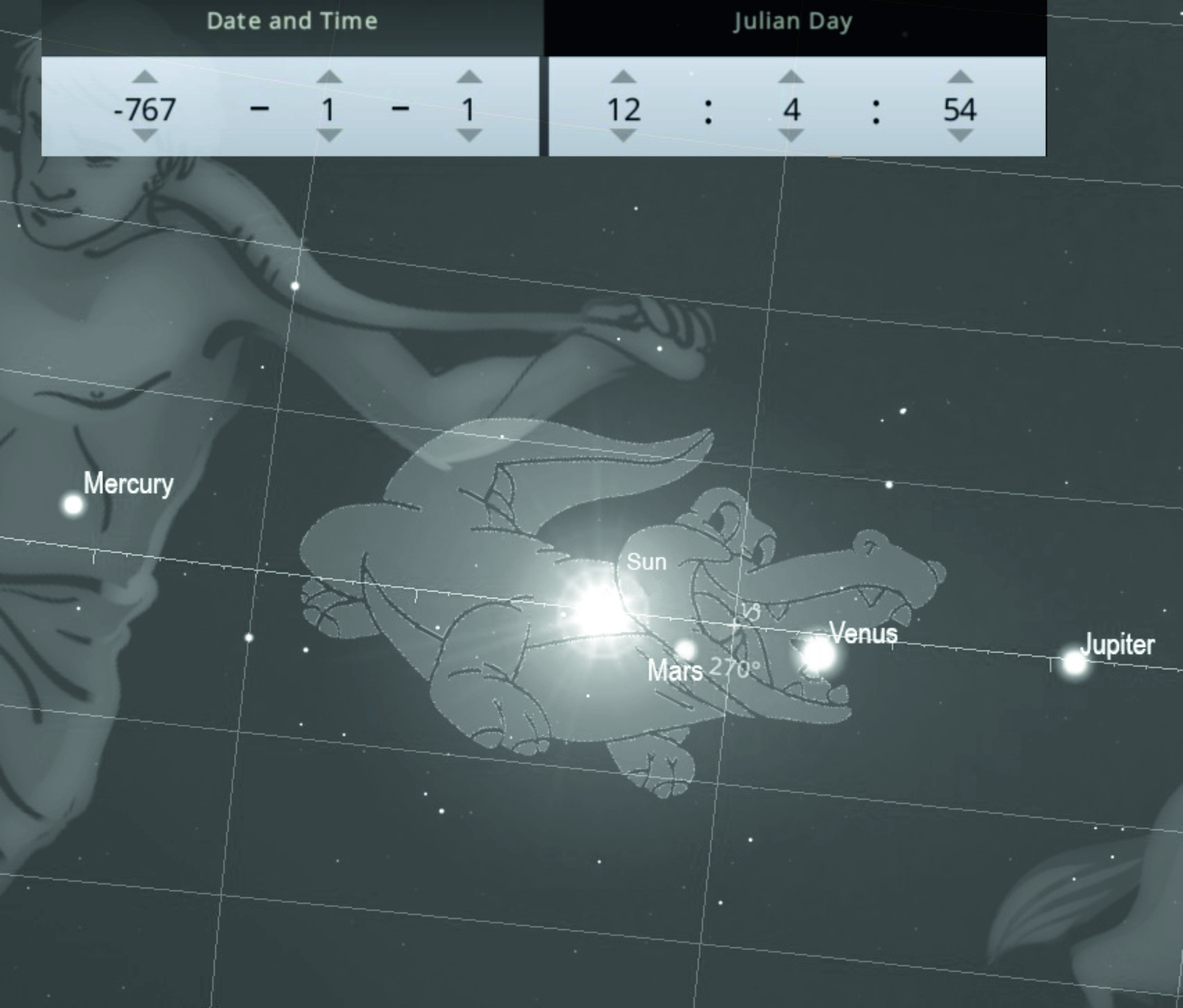
Figure 17.17
Winter solstice and Jupiter were in the Xingji constellation in the 34th year of Wu of Han (767 BCE).
(Source: Stellarium software stimulation)
Winter solstice and Jupiter were in the Xingji constellation in the 34th year of Wu of Han (767 BCE).
(Source: Stellarium software stimulation)
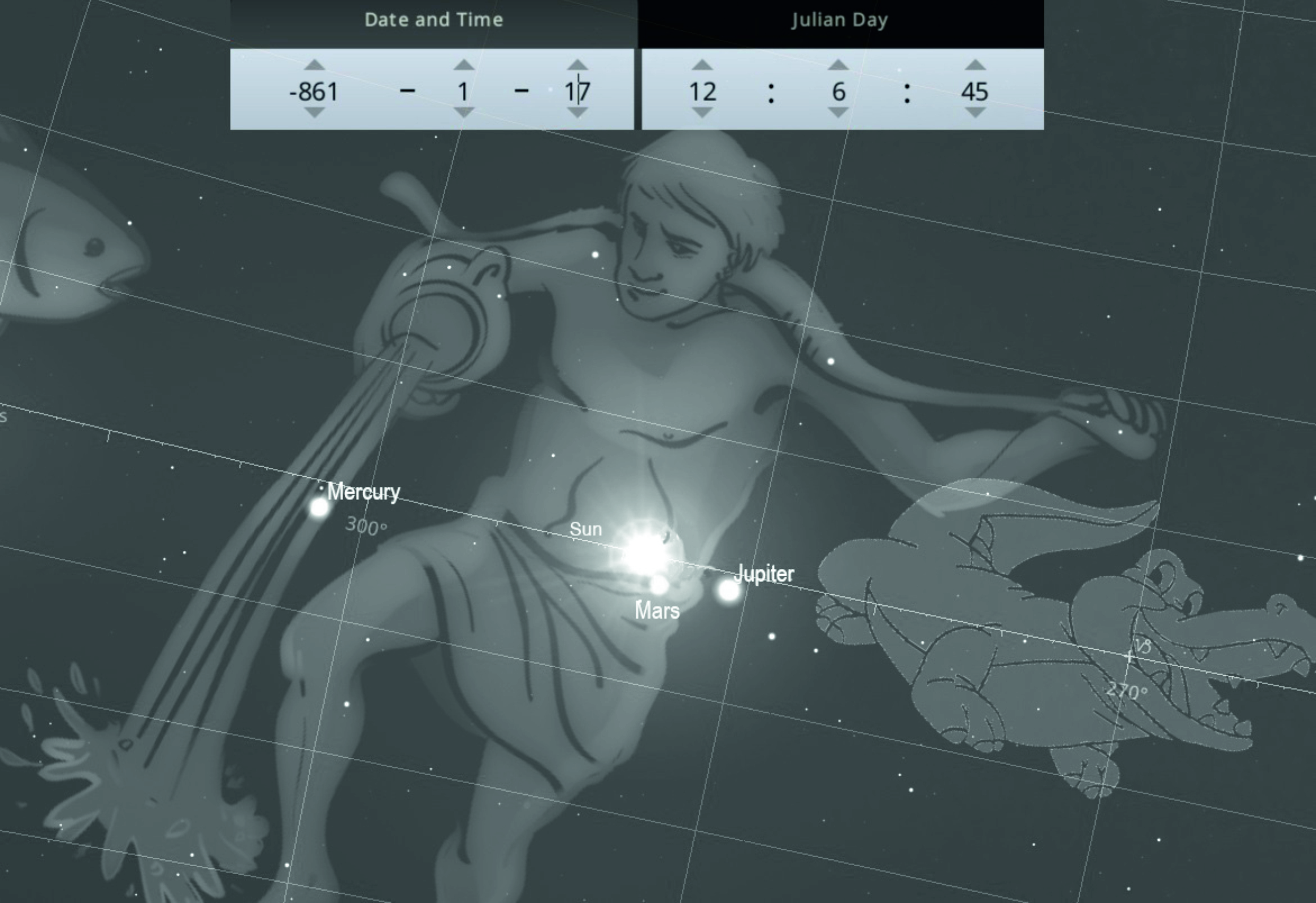
Figure 17.18
A conjunction of all planets in winter, in the tenth month, on 17 January 861 BCE, in the sign of Aquarius.
(Source: Stellarium software stimulation)
A conjunction of all planets in winter, in the tenth month, on 17 January 861 BCE, in the sign of Aquarius.
(Source: Stellarium software stimulation)