
Chronology and Origins of Indo-European Civilizations
Volume 1 Images
Chapter 2
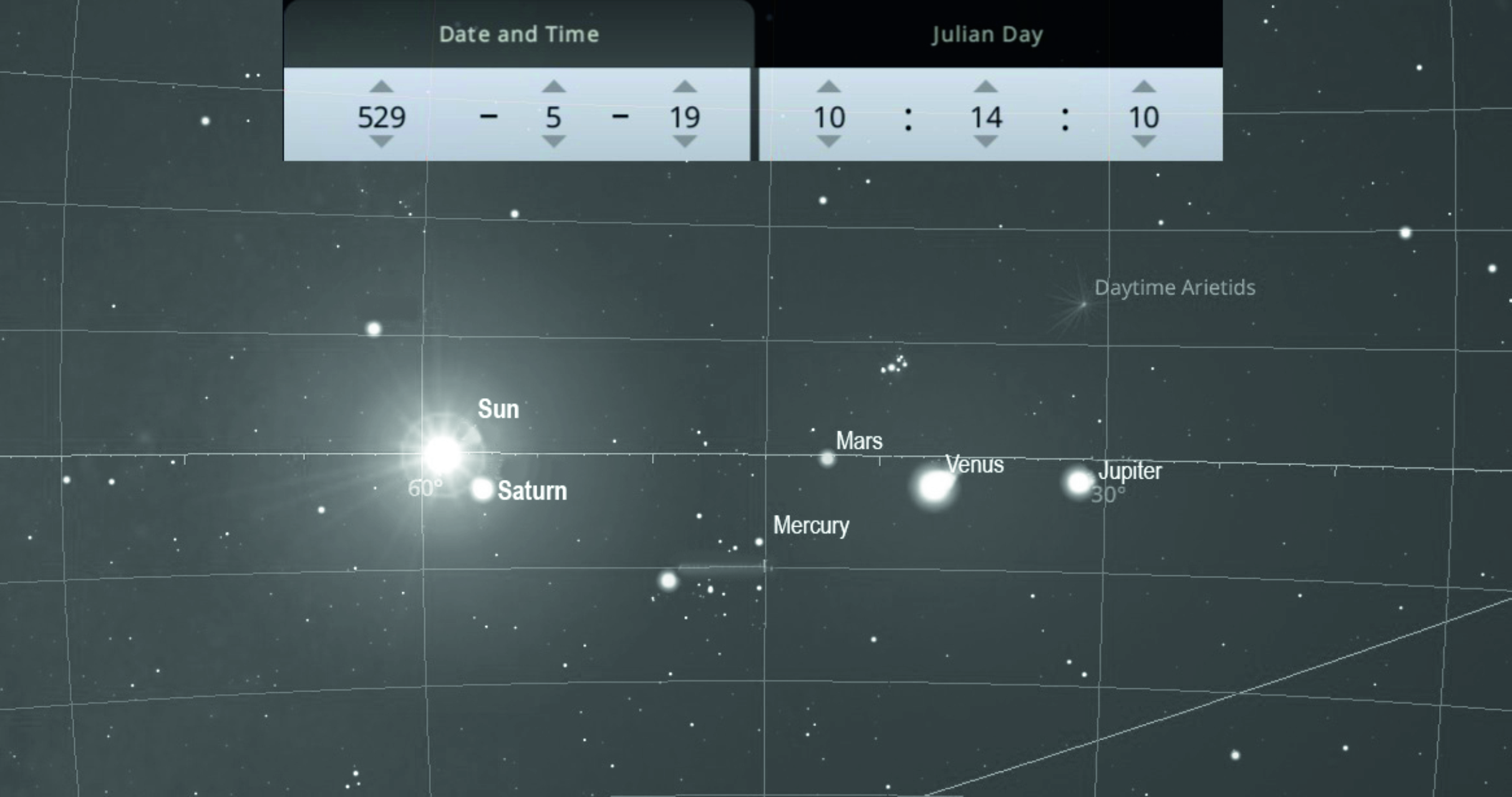
Figure 2.1
The conjunction of seven planets (including the sun and the moon which are counted as 'planets' in Vedic and Arabic astronomy) on 19 May 529 CE.
(Source: Stellarium software version 25.2)
The conjunction of seven planets (including the sun and the moon which are counted as 'planets' in Vedic and Arabic astronomy) on 19 May 529 CE.
(Source: Stellarium software version 25.2)
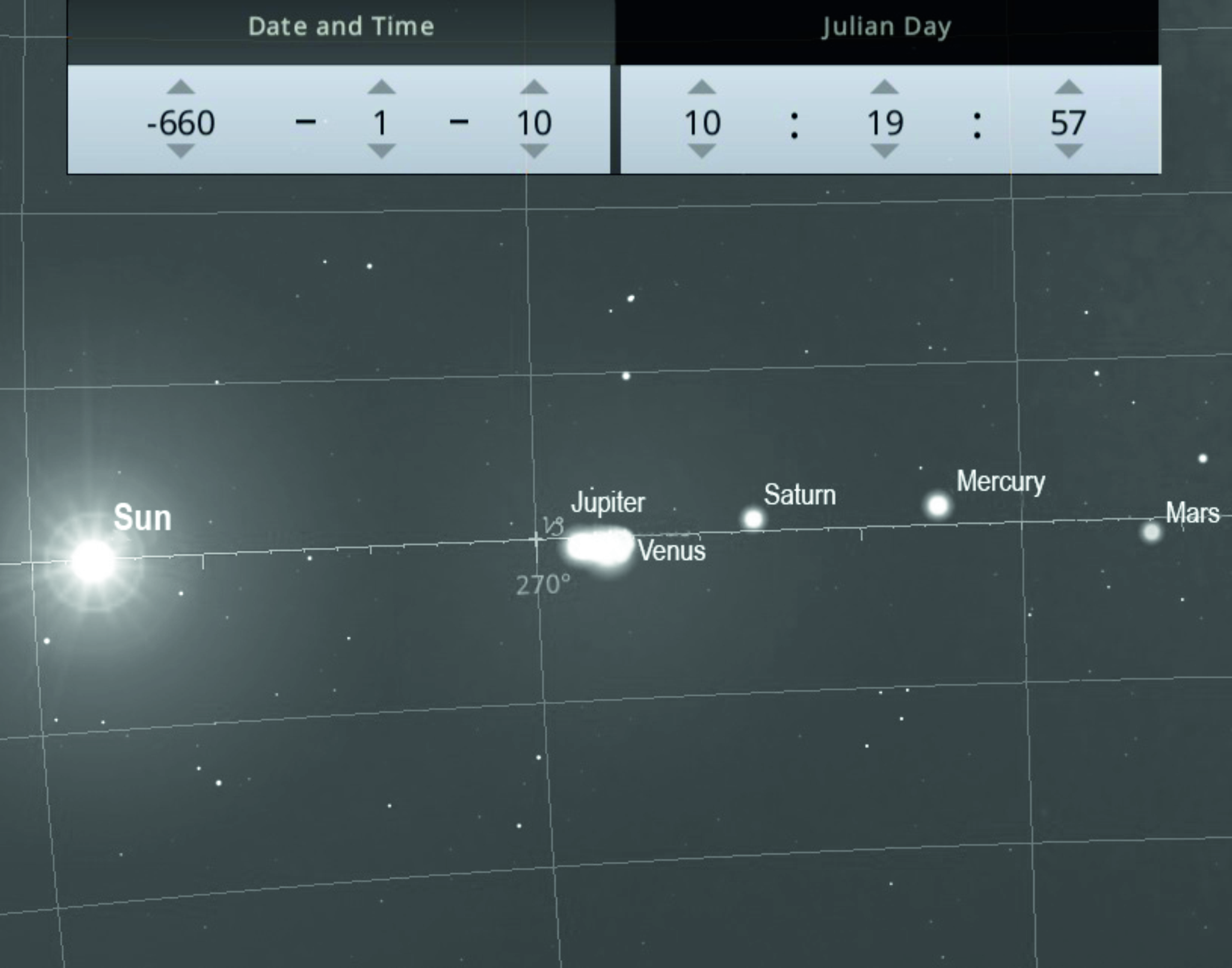
Figure 2.2
The bright light on the left marks the conjunction of Jupiter and Venus visible in the night sky of 9/10 January 660 BCE.
(Source: Stellarium software version 25.2)
The bright light on the left marks the conjunction of Jupiter and Venus visible in the night sky of 9/10 January 660 BCE.
(Source: Stellarium software version 25.2)
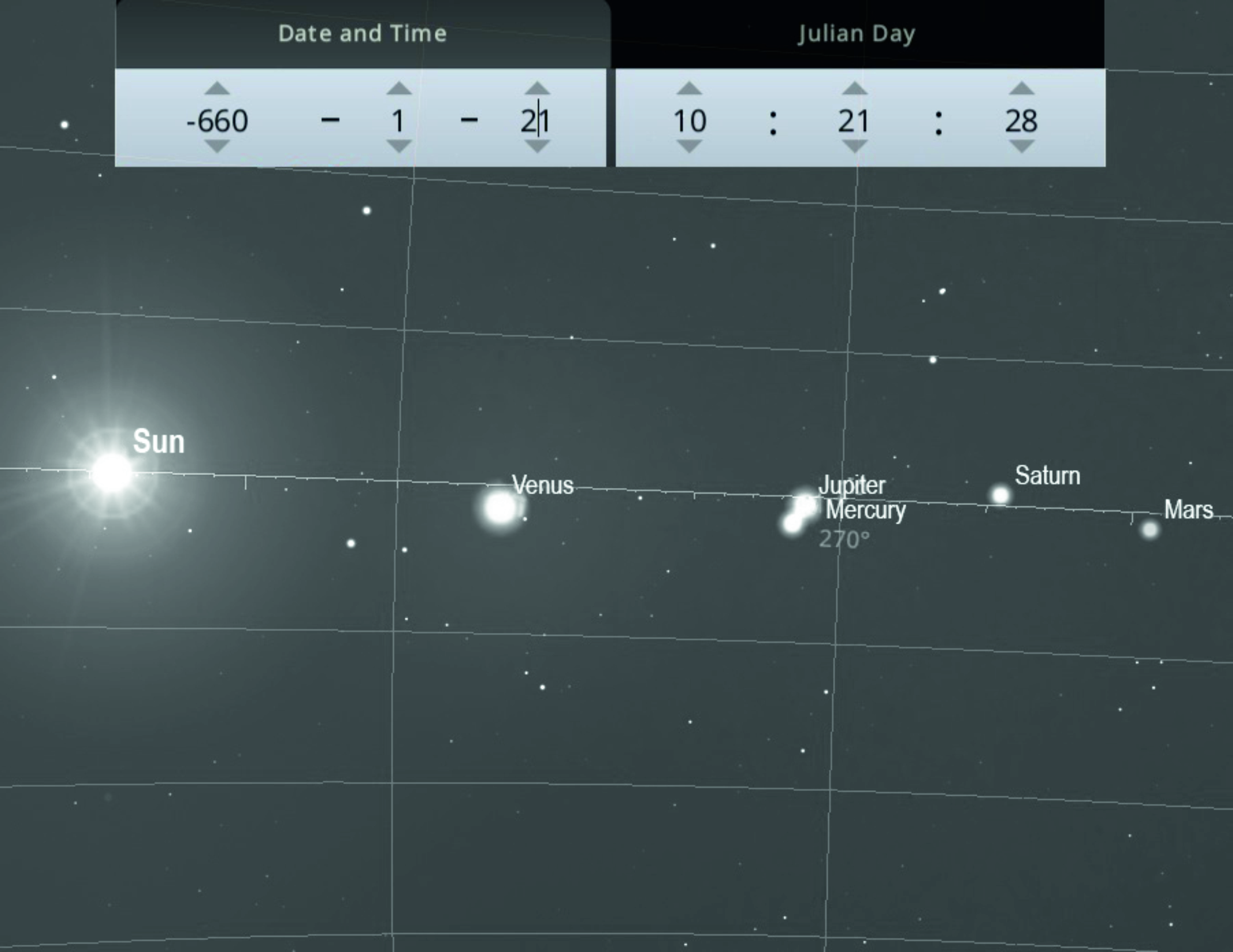
Figure 2.3
The bright light on the left marks the conjunction of Jupiter and Mercury in the night sky in the early morning on 21 January 660 BCE.
(Source: Stellarium software version 25.2)
The bright light on the left marks the conjunction of Jupiter and Mercury in the night sky in the early morning on 21 January 660 BCE.
(Source: Stellarium software version 25.2)
Chapter 3
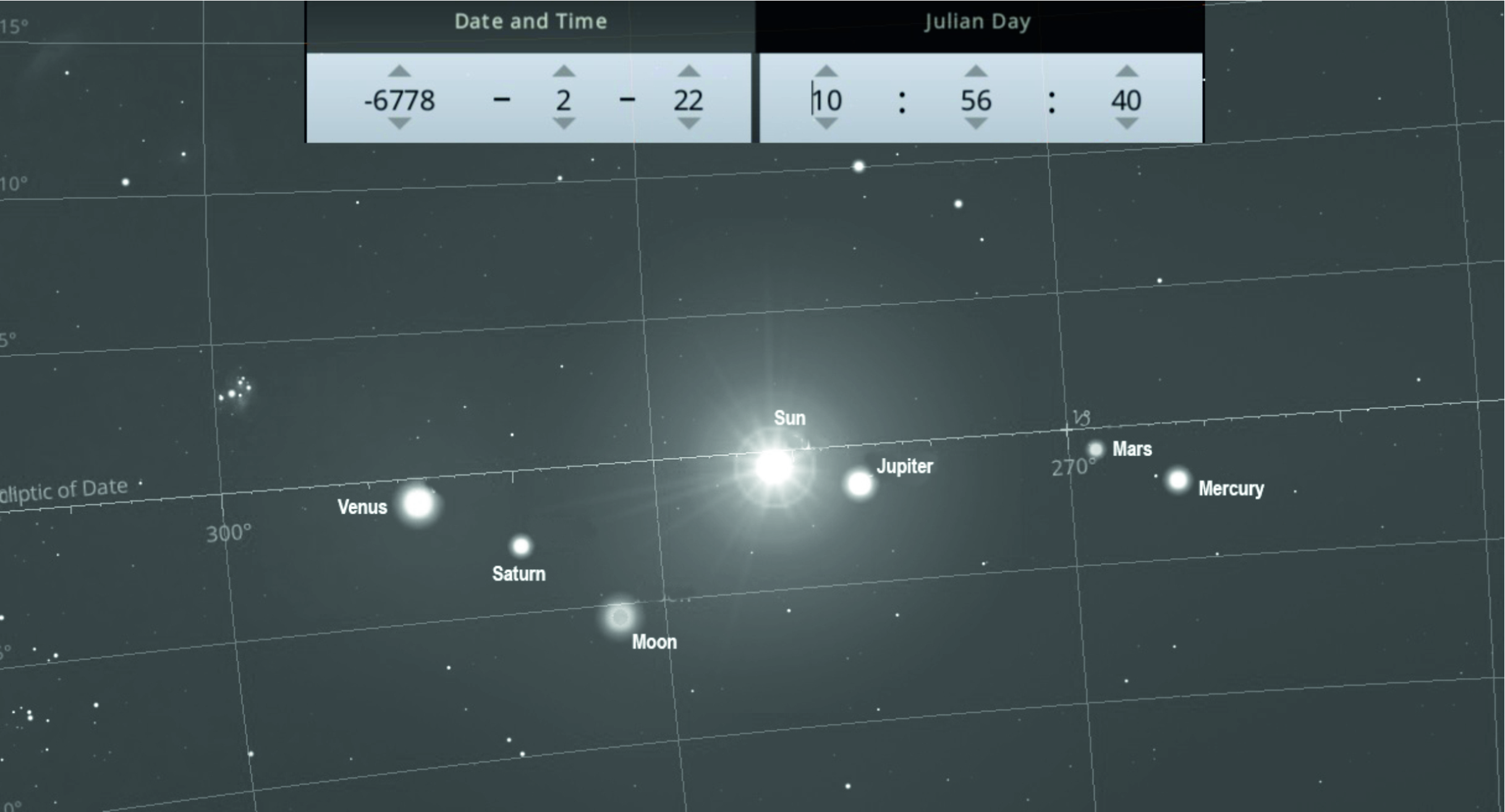
Figure 3.3
The conjunction of all the planets plus the sun and the moon on 22 February 6778 BCE.
(Source: Stellarium software simulation.)
The conjunction of all the planets plus the sun and the moon on 22 February 6778 BCE.
(Source: Stellarium software simulation.)
Chapter 4
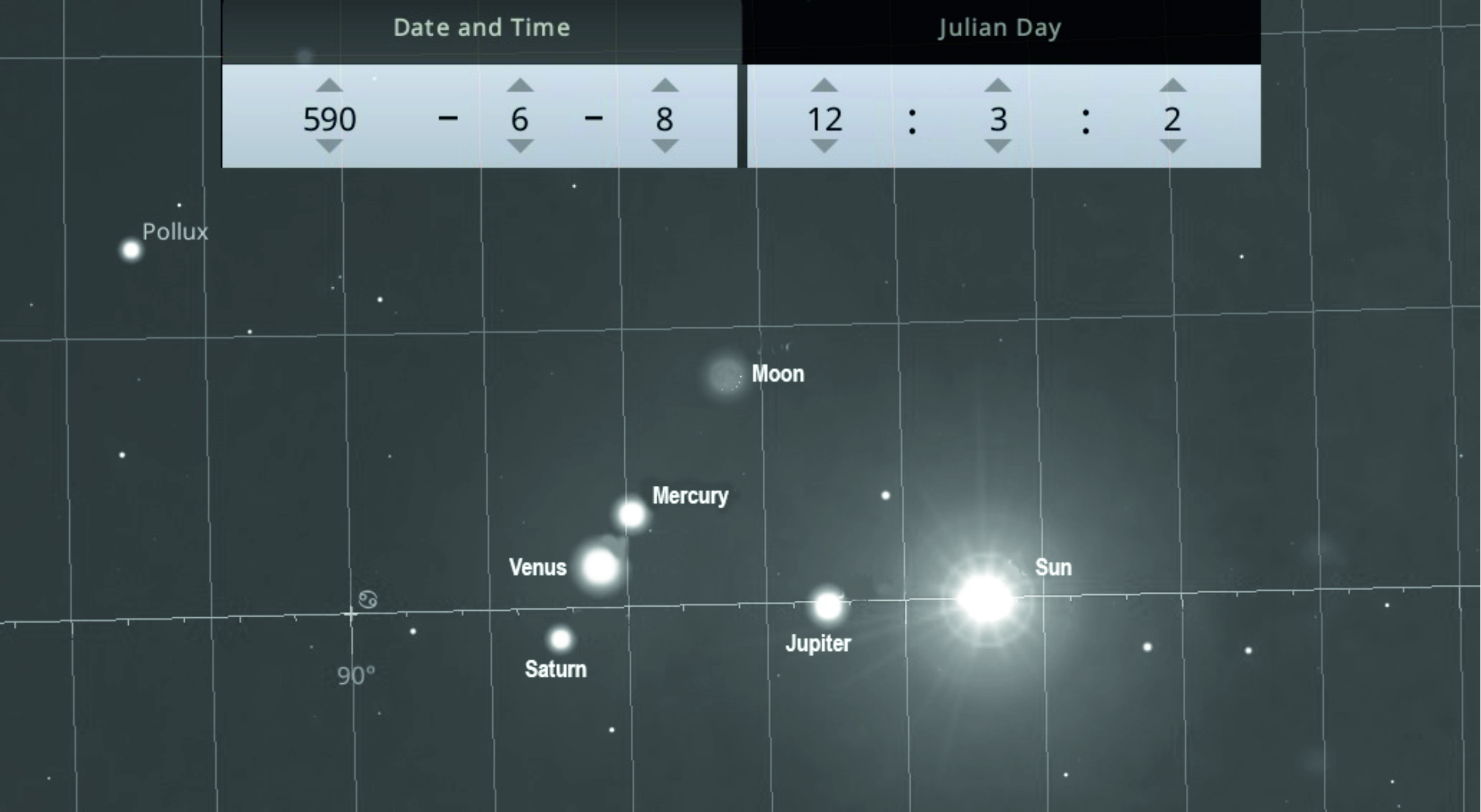
Figure 4.18
The conjunction of all the planets except Mars on 8 June 590 CE.
(Source: Stellarium software simulation.)
The conjunction of all the planets except Mars on 8 June 590 CE.
(Source: Stellarium software simulation.)
Chapter 5
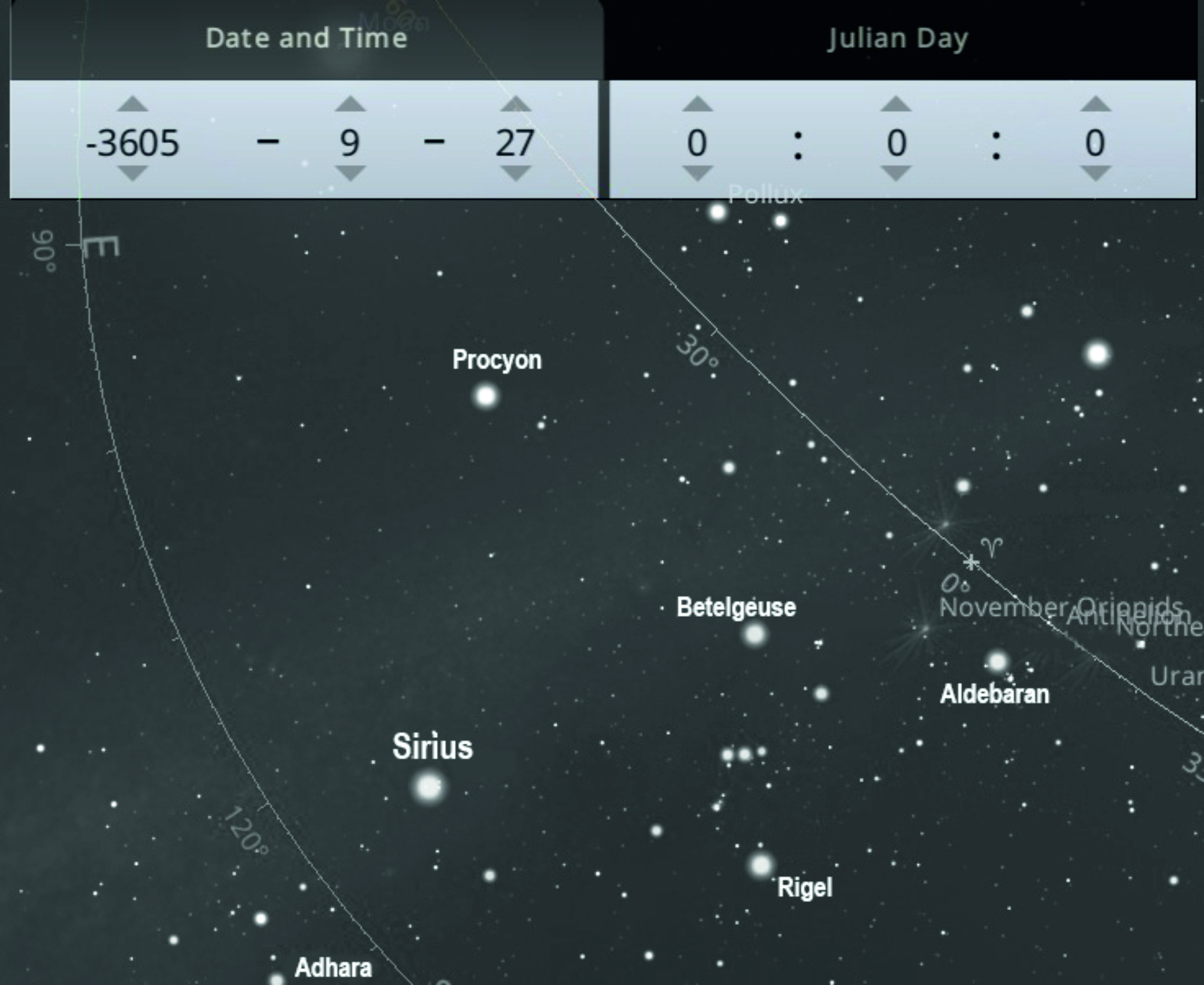
Figure 5.1
Midnight rising of Sirius star at 00:00 hours on 26 September 3605 BCEat Alexandria, Egypt.
(Source: Stellarium software simulation.)
Midnight rising of Sirius star at 00:00 hours on 26 September 3605 BCEat Alexandria, Egypt.
(Source: Stellarium software simulation.)
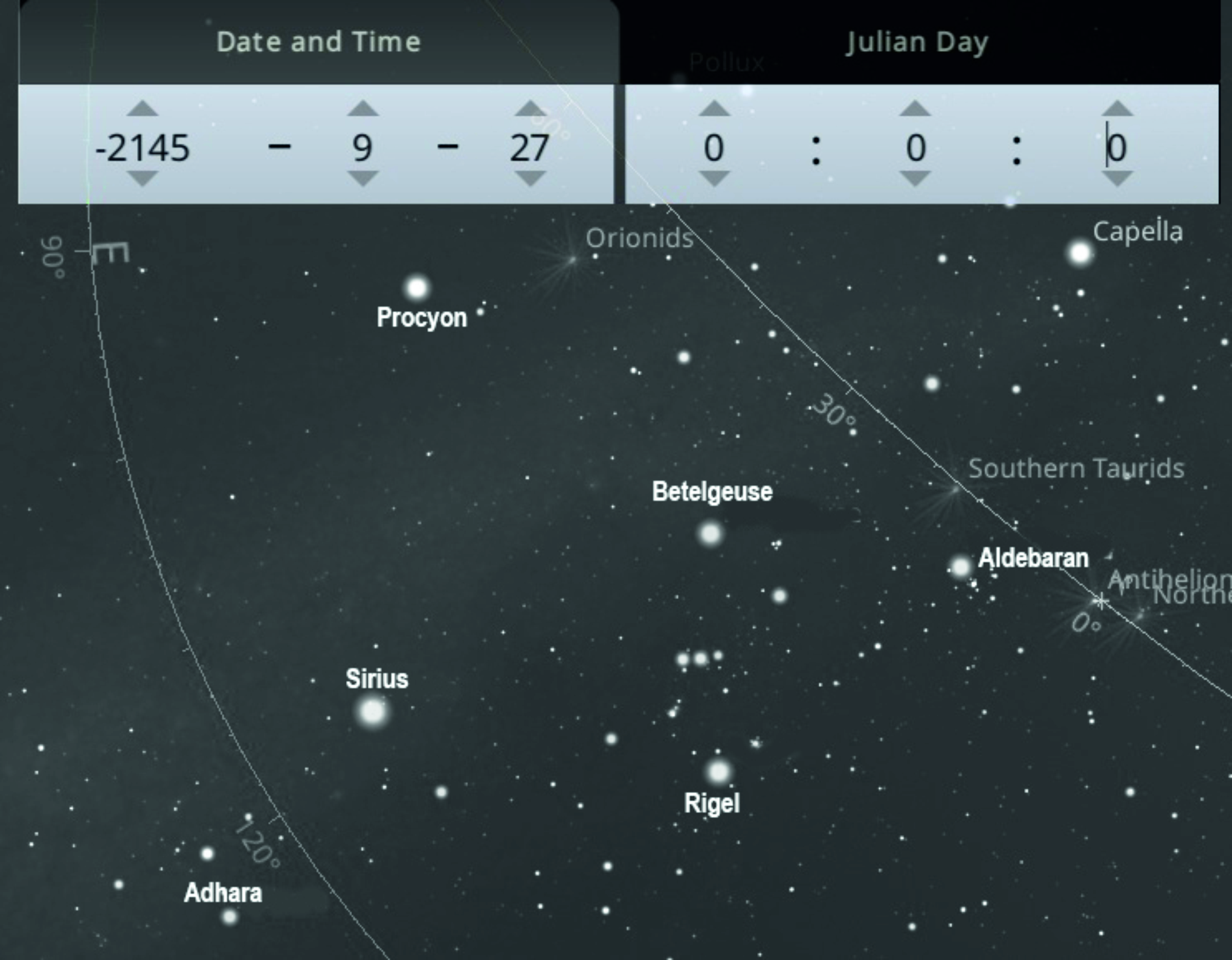
Figure 5.2
Midnight rising of Sirius star at 00:00 hours on 26 September 2145 BCE at Alexandria, Egypt.
(Source: Stellarium software simulation.)
Midnight rising of Sirius star at 00:00 hours on 26 September 2145 BCE at Alexandria, Egypt.
(Source: Stellarium software simulation.)
Chapter 6
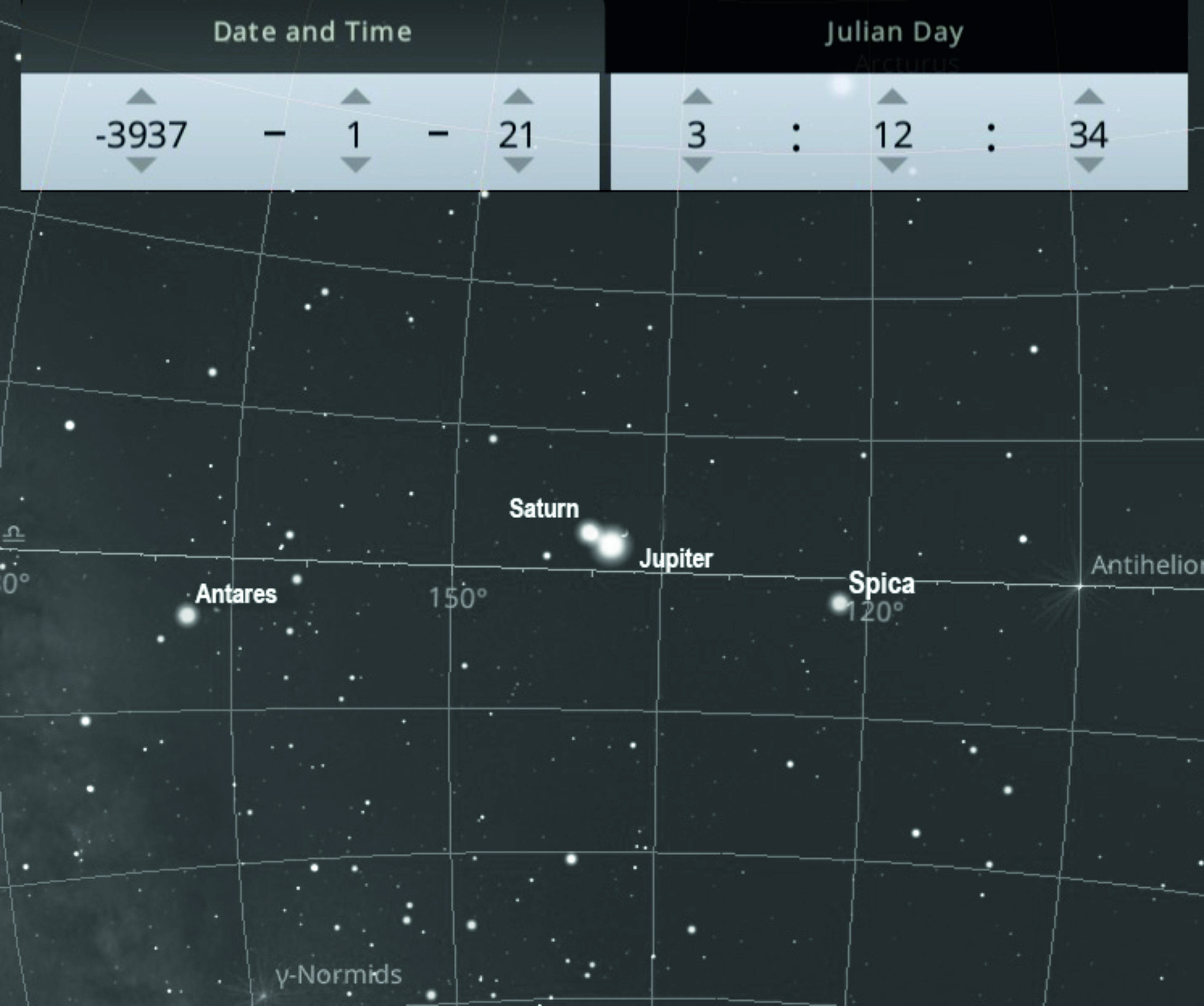
Figure 6.1
A conjunction of Saturn and Jupiter on 21 January 3937 BCE.
(Source: Stellarium software simulation.)
A conjunction of Saturn and Jupiter on 21 January 3937 BCE.
(Source: Stellarium software simulation.)
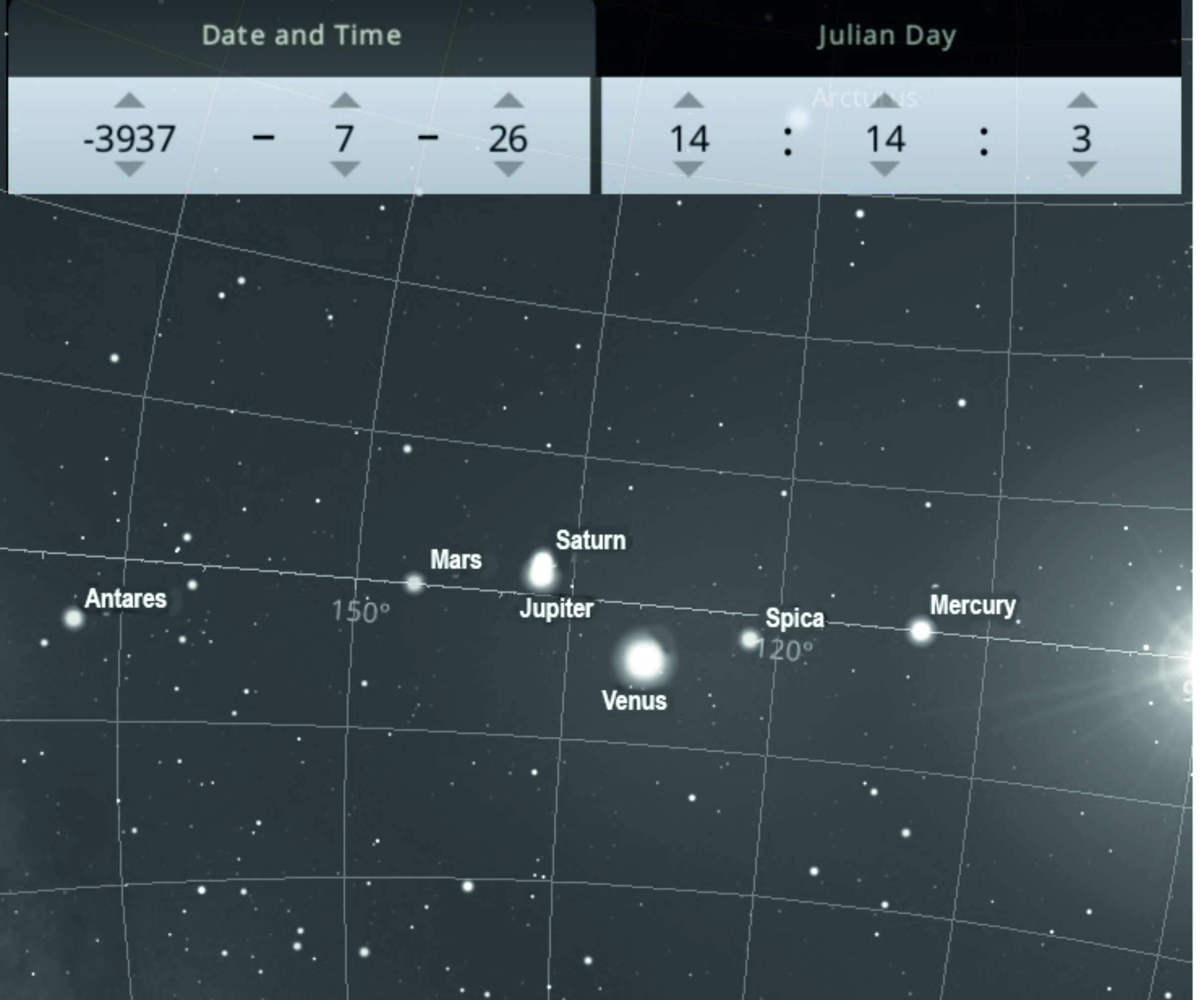
Figure 6.2
A conjunction of Saturn and Jupiter on 26 July 3937 BCE.
(Source: Stellarium software simulation.)
A conjunction of Saturn and Jupiter on 26 July 3937 BCE.
(Source: Stellarium software simulation.)
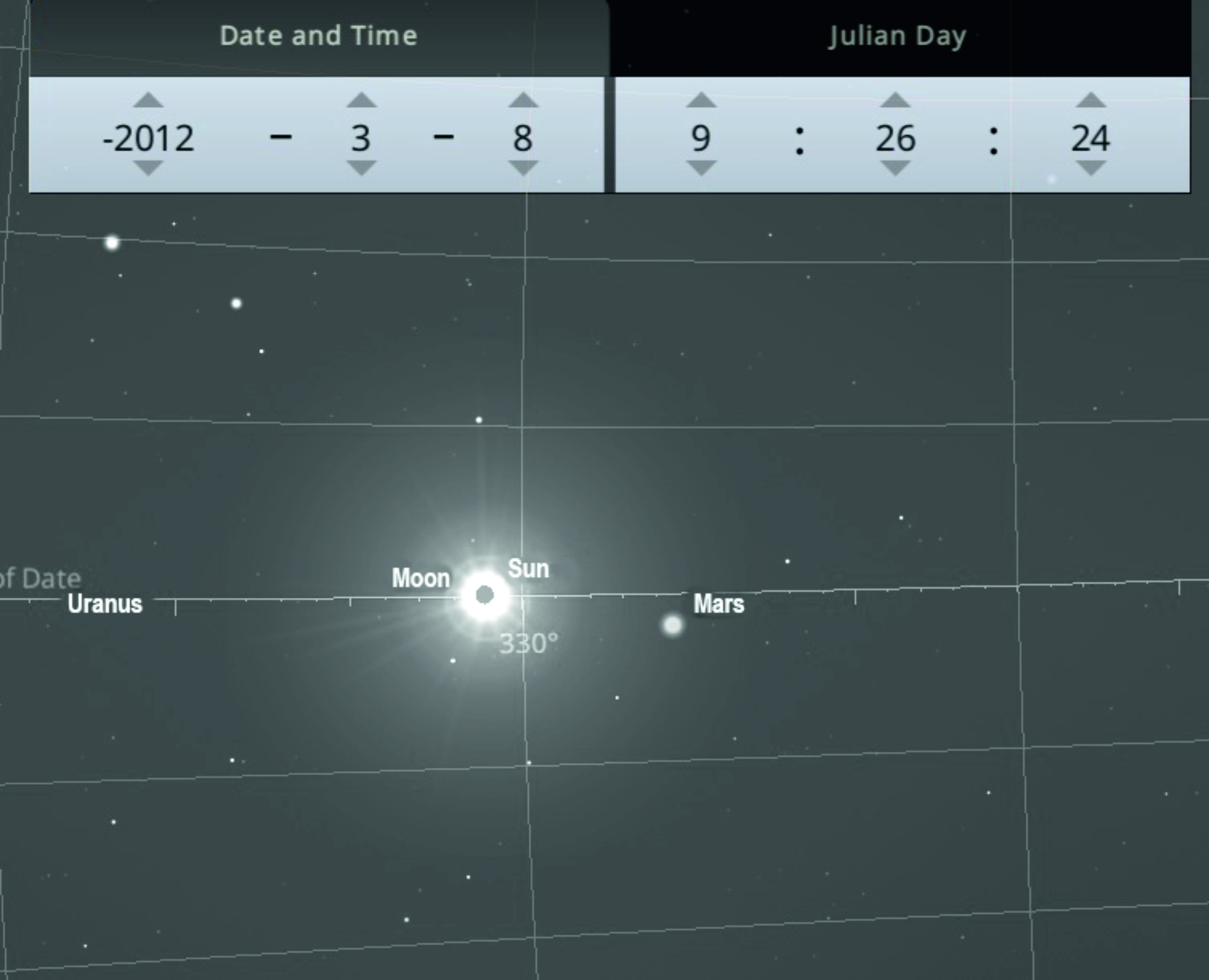
Figure 6.8
Total solar eclipse on 8 March 2012 BCE at 9 a.m. in the month of Adar(also known as Hiyar) with Mars shown to the right of the eclipse as a bright light.
(Source: Stellarium software simulation.)
Total solar eclipse on 8 March 2012 BCE at 9 a.m. in the month of Adar(also known as Hiyar) with Mars shown to the right of the eclipse as a bright light.
(Source: Stellarium software simulation.)
Chapter 7
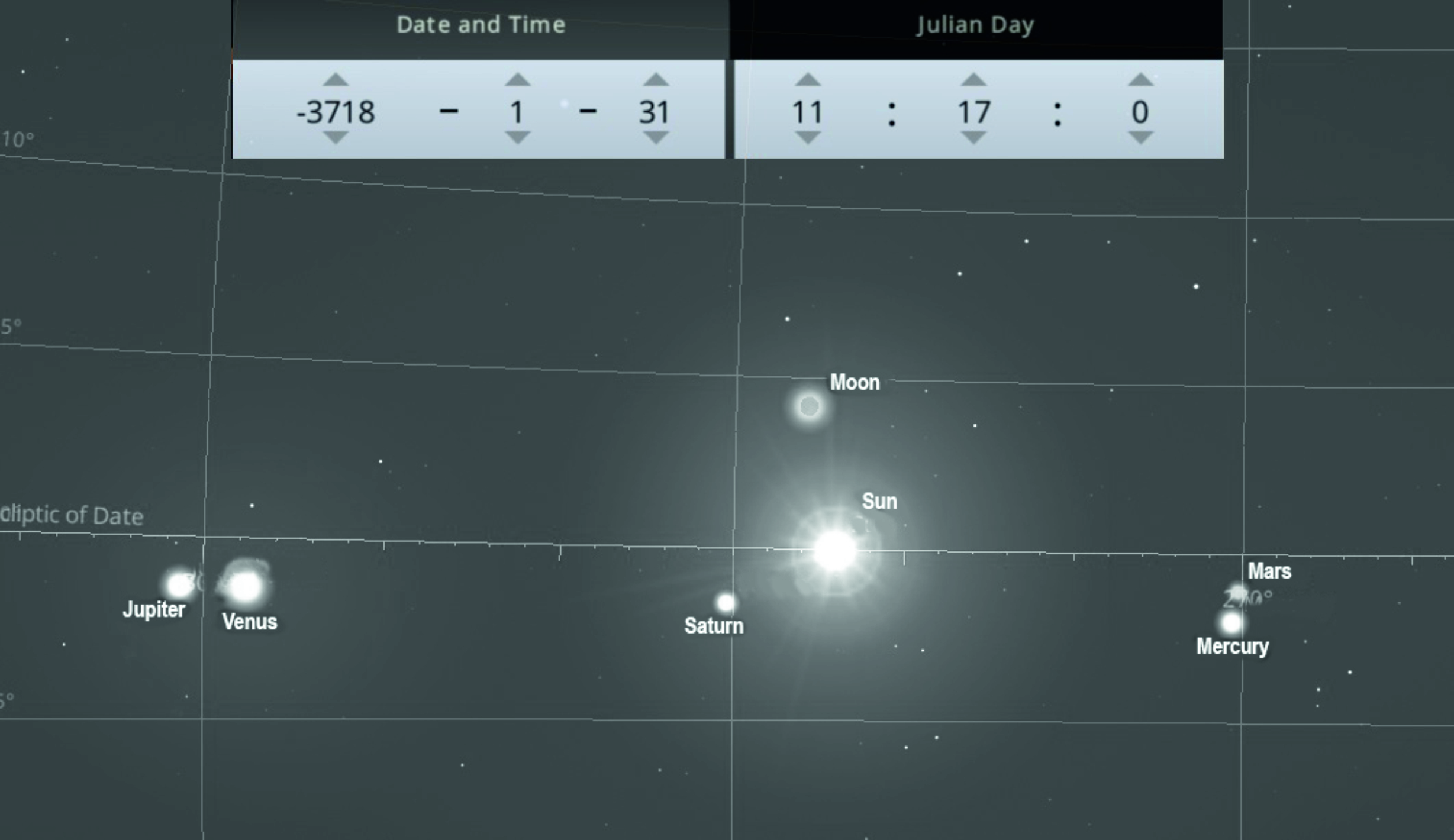
Figure 7.3
A conjunction of all planets in Pisces on 1 February 3718 BCE.
(Source: Stellarium software simulation.)
A conjunction of all planets in Pisces on 1 February 3718 BCE.
(Source: Stellarium software simulation.)
Chapter 9
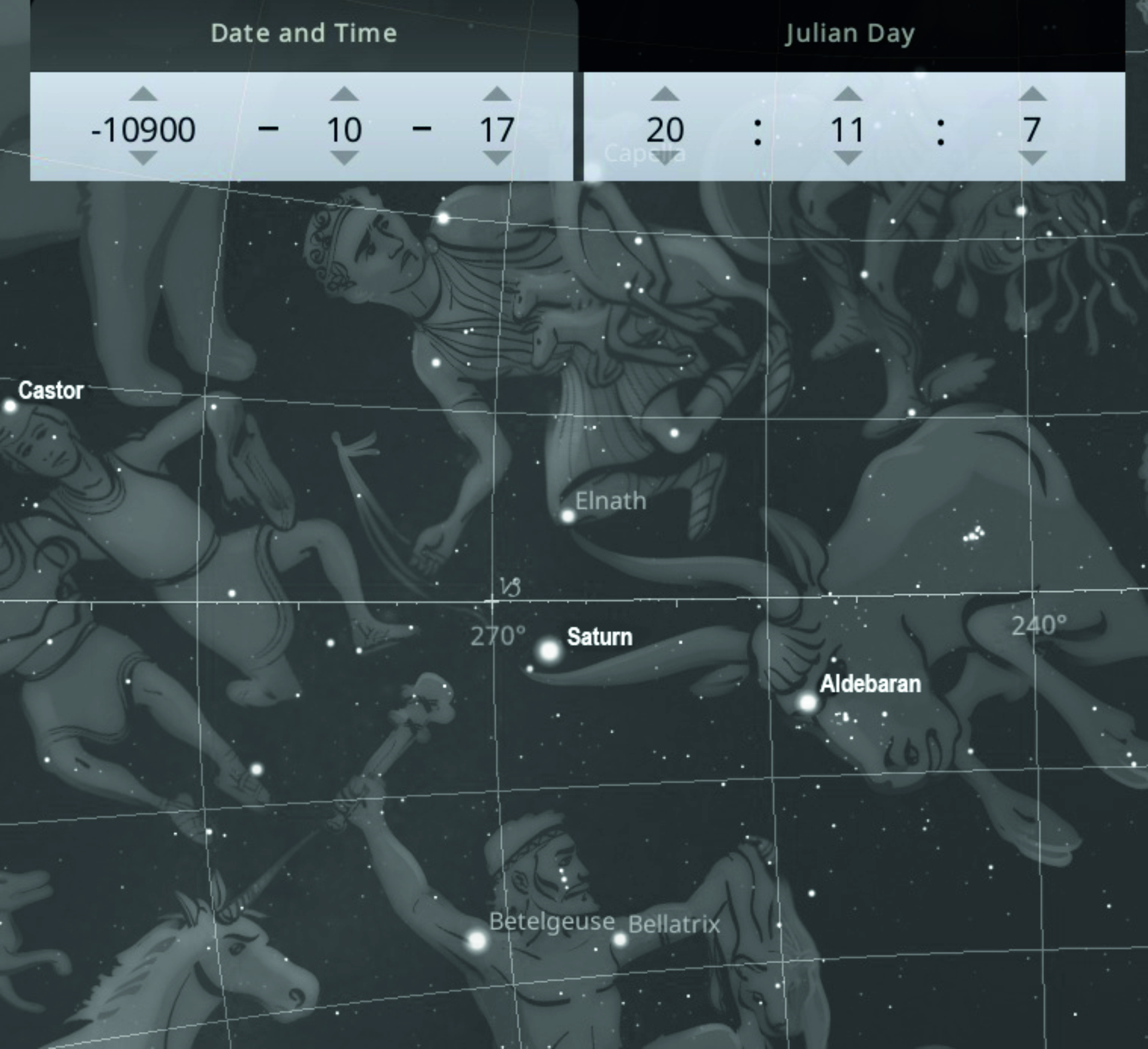
Figure 9.3
Winiter solstice at the first degree of Taurus around 10900 BCE.
(Source: Stellarium software simulation.)
Winiter solstice at the first degree of Taurus around 10900 BCE.
(Source: Stellarium software simulation.)
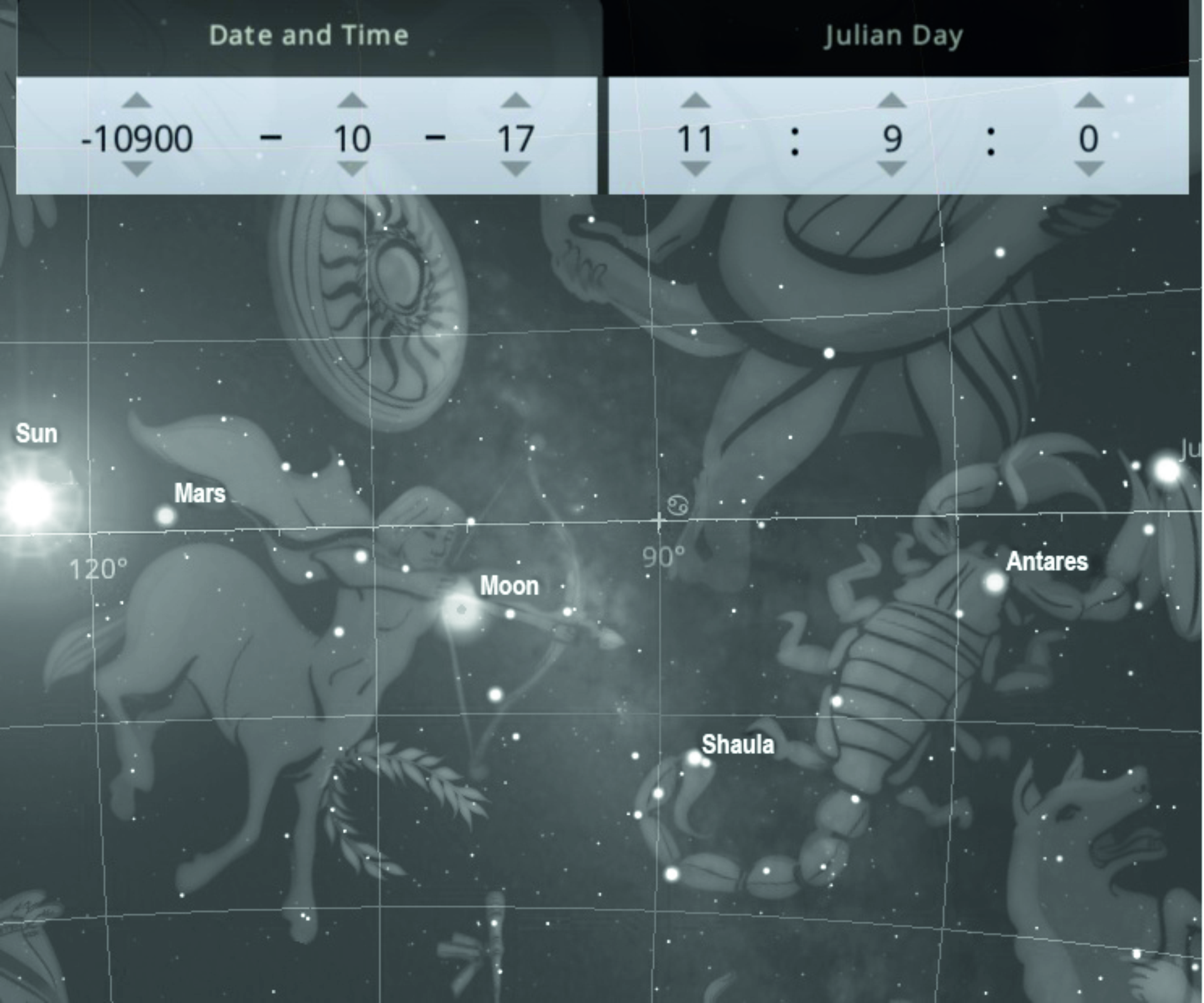
Figure 9.4
Summer solstice at the first degree of Scorpio around 10900 BCE.
(Source: Stellarium software simulation.)
Summer solstice at the first degree of Scorpio around 10900 BCE.
(Source: Stellarium software simulation.)